


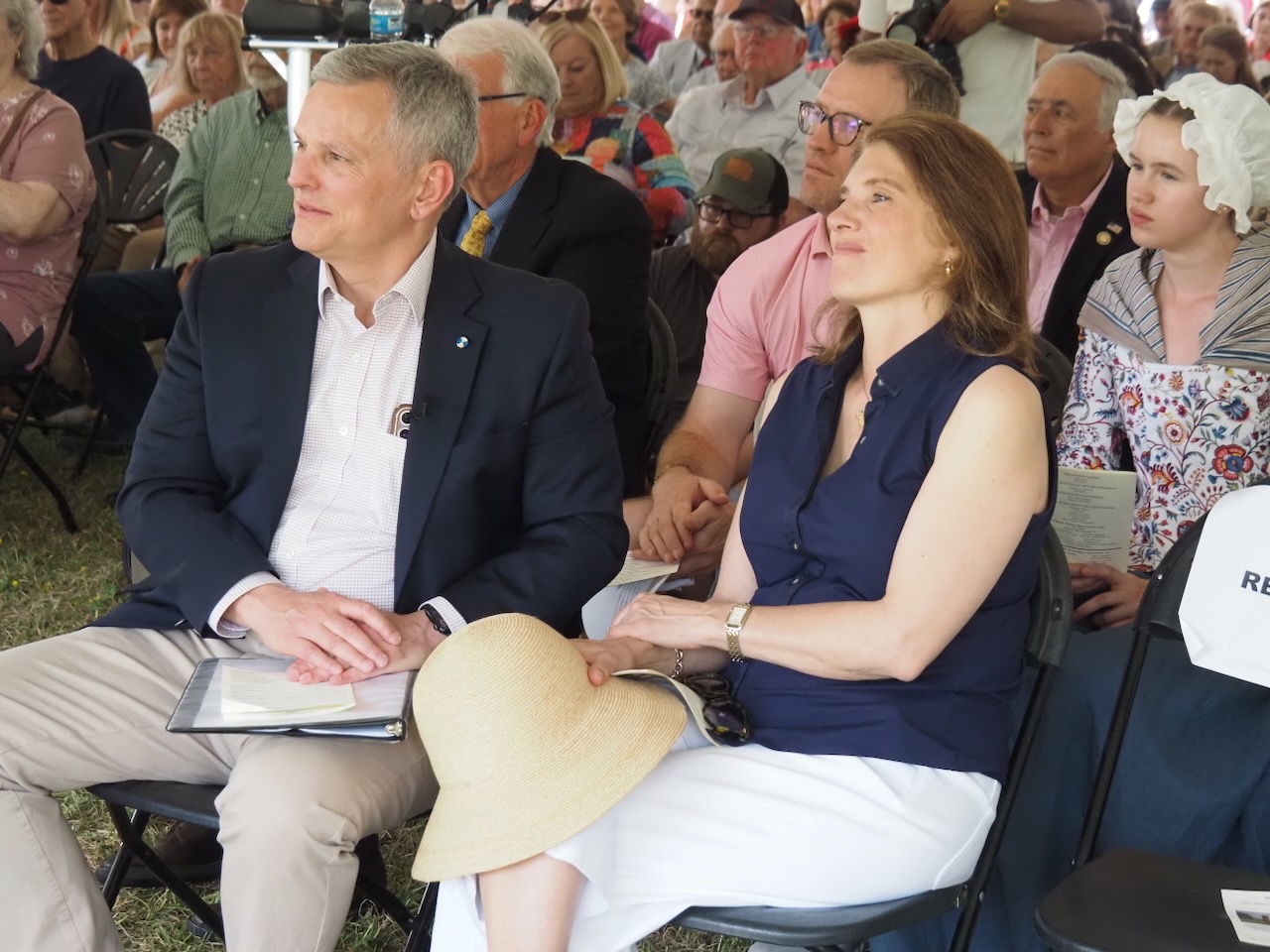
Governor Josh Stein proclaimed today a huge day for the state of North Carolina as he spoke at the Historical Halifax Restoration Association’s annual Halifax Resolves Day program.
“Two-hundred and fifty years ago today, the Fourth North Carolina Provincial Congress met here in Halifax and adopted the Halifax Resolves — the first official action by any colony to declare independence from the king.”
There were competing forces in the months and years before the delegates met in Halifax, the governor said — those who wanted reconciliation with the crown and those who wanted rebellion. “A large portion of the colonial population actually wanted to make accommodation with England.”
Even after the battles of Lexington and Concord in 1775, the Second Continental Congress meeting in Philadelphia in July of that year did not declare independence, but instead submitted the Olive Branch Petition to the king. “They wanted accommodation to the crown on more favorable terms.”
Editor's note: There will be additional coverage of Sunday's events Monday


As the calendar turned from 1775 to 1776, the tide began to turn in favor of rebellion, but the path was by no means a certainty. It was three months before the Fourth Provincial Congress met that Thomas Paine published Common Sense, a pamphlet Stein said “was truly revolutionary and took off like wildfire across the colony. It was the most published book in American history. It made a powerful argument for an independent democratic nation founded on equality. It was truly a radical notion.”
In North Carolina, just a few weeks after its publication in February 1776, a militia of patriots skirmished with loyalist troops at the Battle of Moore’s Creek Bridge. “The patriots soundly defeated the loyalists, putting an end to English rule in North Carolina, blocking an English invasion of the south, and lighting a flame of liberty within North Carolinians.”
As these events were swiftly moving, North Carolina’s provincial delegates spent time meeting with fellow North Carolinians and towns and counties all across the colony. “They brought all those perspectives with them here in April 1776.”
Leaders of that congress included the namesakes of future North Carolina counties — Samuel Johnston, Richard Caswell, Cornelius Harnette, Thomas Burke, and Abner Nash.
“In the Resolves, they detailed some of their neighbors’ grievances that they had heard — or in their words, the usurpations and violence committed by the king,” Stein said. “They wrote that the king and parliament of Great Britain had usurped the power over persons and property of the people.”
He said they wrote that Great Britain had disregarded “their humble petitions for peace, liberty, safety. They made the first legislative acts denouncing war, famine, and every species of calamity destroying the people and committing the most horrid devastations in the country.”
By adopting the Resolves, the 83 delegates “did something radical, something revolutionary, something patriotic. They unanimously empowered North Carolina’s representatives at the Second Continental Congress up in Philadelphia to vote to declare our nation’s independence from the crown.”
With these Resolves, Stein said, “North Carolina became the first colony to take any action declaring our nation’s independence. It’s just incredible. While the Resolves were far from perfect — because there are parts that will make you feel very uncomfortable — they did, however, set us on a path of expanding freedom in this nation.”
The governor was referring to a portion of the document which addressed slavery.
The historic action and the fact that it was unanimous was by no means a foregone conclusion, he said. “After all, it had never happened in the world ever. Back then their act would have been considered treason — a crime punishable by death — directly rebuking the world’s greatest superpower; a country they depended on for military production and economic security.”
Failure was objectively likely. “Failure could have been fatal. So with these stakes and these odds, this vote for independence was brave and truly incredible.”
In the action, there are two key truths. “The delegates had the audacity to believe things could be different from anything that had ever been before. They had the wisdom to go forward together.”
They believed that a different path was possible, Stein said. “Maybe they pulled inspiration from the earlier colonial victories like the Battle of Moore’s Creek Bridge or from the publication of Common Sense that so clearly laid out why this country should be independent. Maybe they took stock of the colony’s strengths.”
Perhaps, he said, “They simply determined that the status quo was simply no longer tolerable. But no matter the reason, they decided that a long shot was a shot worth taking, and from there they understood that unity would increase their odds of success. The British Empire could surely subdue a ragtag militia or a single colony, but a united force at least stood a chance.”
The fact that 83 delegates in Halifax voted in favor of the Resolves was a precursor of the unity that the revolution would require, the governor said.
While the delegates didn’t perfectly agree on why they supported independence or what their new nation would look like, “They agreed on enough — enough to stand side by side locked arm in arm.”
Two-hundred and fifty years ago, “Internal division was one of the greatest threats to our nation’s success,” he said. “Two-hundred and fifty years later, I would venture that it is still true. There are so many forces seeking to divide us that profit from our distrust of one another. There are still forces making the American dream feel out of reach — telling us that our success requires others to fail.”
Too often, Stein said, “We hear crudeness and incivility and experience division and not decency. It does not have to be that way. Just like our forebearers in Halifax, we can chart a different course — a patriotic course right here. After all, we are not red, we are not blue. We are red, white, and blue. E pluribus unum — out of many, one. We are the United States of America — 250 years later it is time to remember that and become the united United States of America.”
Said the governor: “We have so much to gain from bridging our differences — not glossing over them — but having the confidence to find common ground and the patriotism to remember that we are all Americans and that we all love this place. It is a revolutionary idea and it is the North Carolina way. Today we celebrate the boldness and unity of the patriots that gathered here in Halifax — that they sparked a revolution and helped launch the world’s first democracy.”