



This budget raises more concerns than I initially realized.
While the proposed tax increase is presented as a modest 4-cent adjustment, the reality is that the budget also relies on approximately $1.6 million from the fund balance to support ongoing operational expenses.
In practice, that creates the equivalent of roughly a 15-cent increase in taxpayer burden while continuing a pattern that has now occurred for three consecutive years: balancing recurring operating costs with reserve funds instead of long-term revenue growth.
My concern is not simply about this year’s budget, but about what this trend means for the future of Roanoke Rapids.
If reserves continue to be used this way, the city will eventually face increasingly difficult choices.
City leadership has made it clear that maintaining the municipal police department remains a top priority, particularly given staffing and compensation concerns. If those costs continue to rise while revenues remain relatively stagnant, future reductions may fall on other departments and services that directly contribute to the city’s quality of life.
One department that stands out is Parks and Recreation, which currently operates on approximately $2.1 million annually. That department supports far more than recreational programming alone. It includes our parks, recreation centers, pool, splash pad, playgrounds, senior center, library, museums, and community facilities such as Kirkwood Adams and Lloyd Andrews. These amenities are part of what makes a community livable and attractive to families, businesses, and future residents.
My fear is that without structural changes, the city may eventually find itself raising taxes further while simultaneously reducing the very investments that encourage people to stay and invest here. Over time, that creates a cycle where the tax base shrinks, service demands grow, and residents see fewer visible improvements in return for higher taxes.
At the same time, I believe this conversation should remain focused on outcomes rather than emotion. Public safety is critically important, but so are roads, parks, emergency medical response, recreation opportunities, and the overall quality of life residents experience every day.
In my opinion, most people do not choose to live in municipalities in Eastern North Carolina because of the size of the local police department. People move to communities because they offer well-maintained roads, sidewalks, parks, recreation opportunities, schools, healthcare access, businesses, and a strong sense of place. Municipal police departments are largely responsive agencies that react to issues as they arise, while many of the services that shape daily life are preventive investments that strengthen communities over time.
For that reason, I believe the city should at least evaluate whether the current structure of municipal services is the most sustainable model moving forward. One option worth discussing would be transitioning primary law enforcement responsibilities to the county sheriff’s office while reallocating a portion of city resources toward infrastructure, parks, recreation, and emergency medical services.
This discussion is especially timely because county leadership will be directly accountable to voters during the upcoming sheriff’s election. Residents therefore have a meaningful opportunity to communicate expectations regarding service levels, visibility, and public safety priorities should any expanded partnership ever be considered.
Below is an example of how such a restructuring could potentially work financially based on current budget figures:
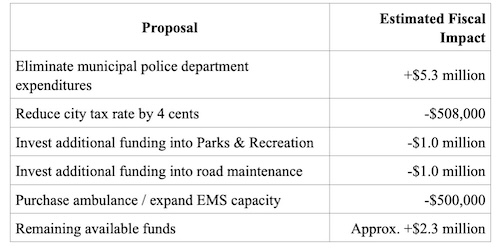
Under this framework, the city could still maintain a lower tax rate while significantly increasing investment in visible community improvements and strengthening emergency medical response capabilities.
For example, additional EMS funding could allow the Fire Department to purchase ambulances and expand staffing budgets for firefighter/EMTs. Many firefighters are already cross-trained, and investing in emergency medical response could improve outcomes for residents while also supporting recruitment, retention, and long-term departmental stability.
Likewise, increasing funding for roads, sidewalks, parks, and recreation facilities would provide residents with visible improvements that directly affect everyday life and help make Roanoke Rapids a more competitive place to live and raise a family.
Whether residents ultimately agree or disagree with this proposal, I believe the larger issue remains unavoidable: the current budget trajectory does not appear sustainable long term. Continuing to rely on fund balance appropriations while avoiding broader structural discussions may only make future decisions more difficult.
My hope is that this budget process encourages an honest conversation about priorities, sustainability, and what kind of community we want Roanoke Rapids to become over the next decade. These are not easy discussions, but they are necessary ones.
I call on all citizens of Roanoke Rapids to show up to the budget hearing on June 2nd and let our elected officials know what is important to you.
Ephraim Brodsky
Roanoke Rapids