


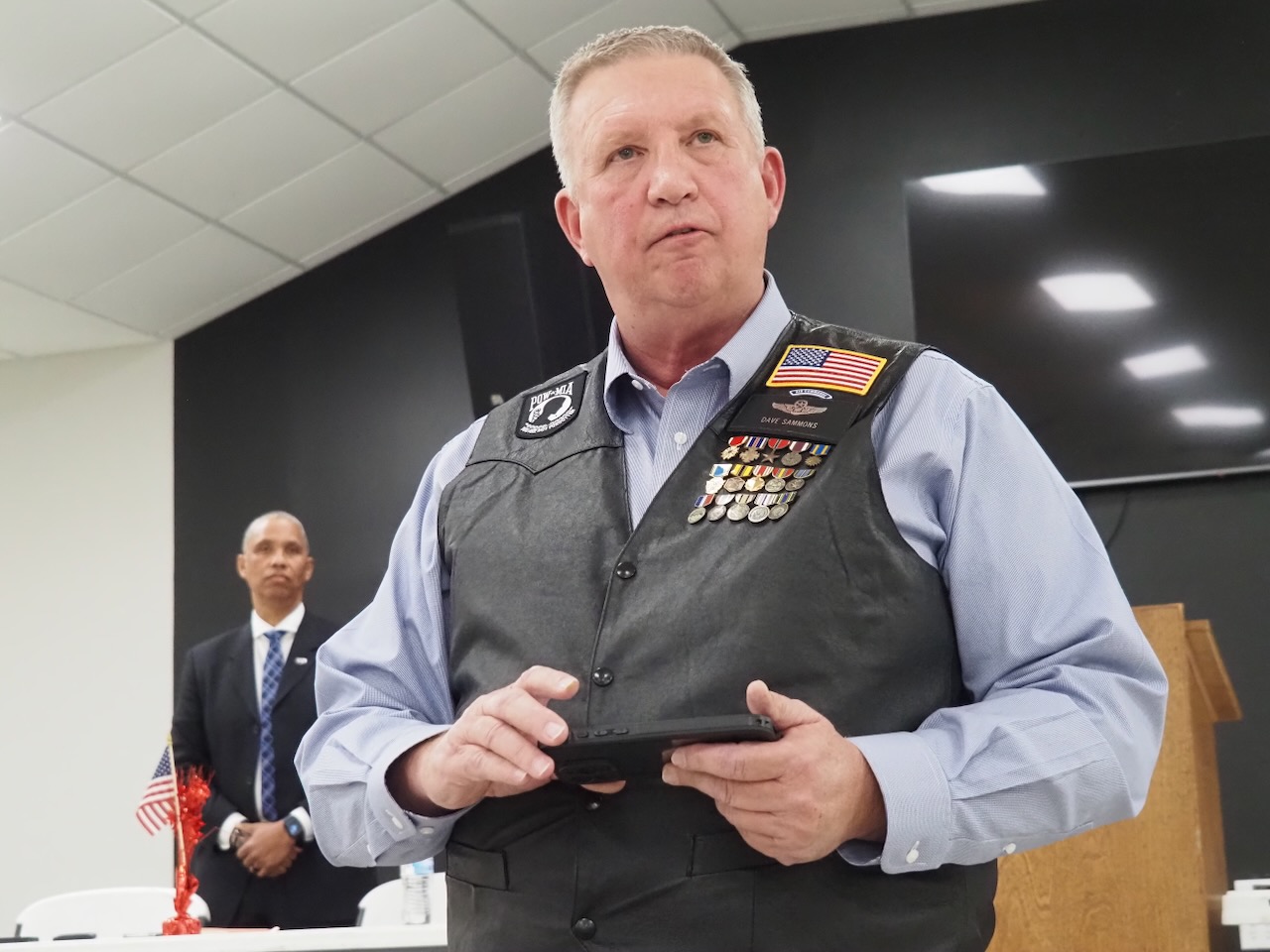
A town hall Friday has led to discussions of forming a veterans council in Halifax County.
The idea was proffered by Dave Sammons, vice commander of American Legion Post 38 in Roanoke Rapids during state Representative Rodney Pierce’s Bringing the Capital to the Constituents town hall.
Sammons directed his comments to Jocelyn M. Mallette, secretary of the state department of military and veteran affairs.
“I hear about the North Carolina Veterans Council and I notice four county commissioners in this room,” he said. “Halifax County doesn’t have a veterans council and we should have that. We should be able to go to the North Carolina Veterans Council and they should have our voices heard as veterans.”
Sammons said afterward he envisions a group made up of various military representatives and different military organizations, including the VFW and the numerous American Legion posts in the area. “They can meet once a month or once a quarter and voice their concerns. For example the memorial (Veterans Park) in (Roanoke Rapids) doesn’t have the Vietnam veterans in there. But what other veterans are missing in Veterans Park? Like the move of our Veterans Services Office, there were a number of veterans who were opposed to that move in Halifax to the social services building and that should have been vetted by veterans in the community.”
The commissioners could have requested the veterans council to look into the matter and get their input and opinion. “It was more of a decision for affected veterans.”
Halifax County Commissioner Thomas Barrett said he is willing to bring up the matter to the board. “We’re going to get together here and see if he (Sammons) can come to the board and try to give some information. I think it’s a good idea and we’re going to see if we can do something to serve the community.”
Barrett believes a council would “give veterans a voice. It gives the veterans somewhere they can collectively go and say, ‘hey, here’s our concerns, here’s what we would like to see happening.’ It also gives us as commissioners someone we can go to and say, ‘hey, we need to do this. How is it going to affect you?’ It will open up a good dialogue of making sure we’re doing things to help them and they’re telling us the things we can do to help them.”