


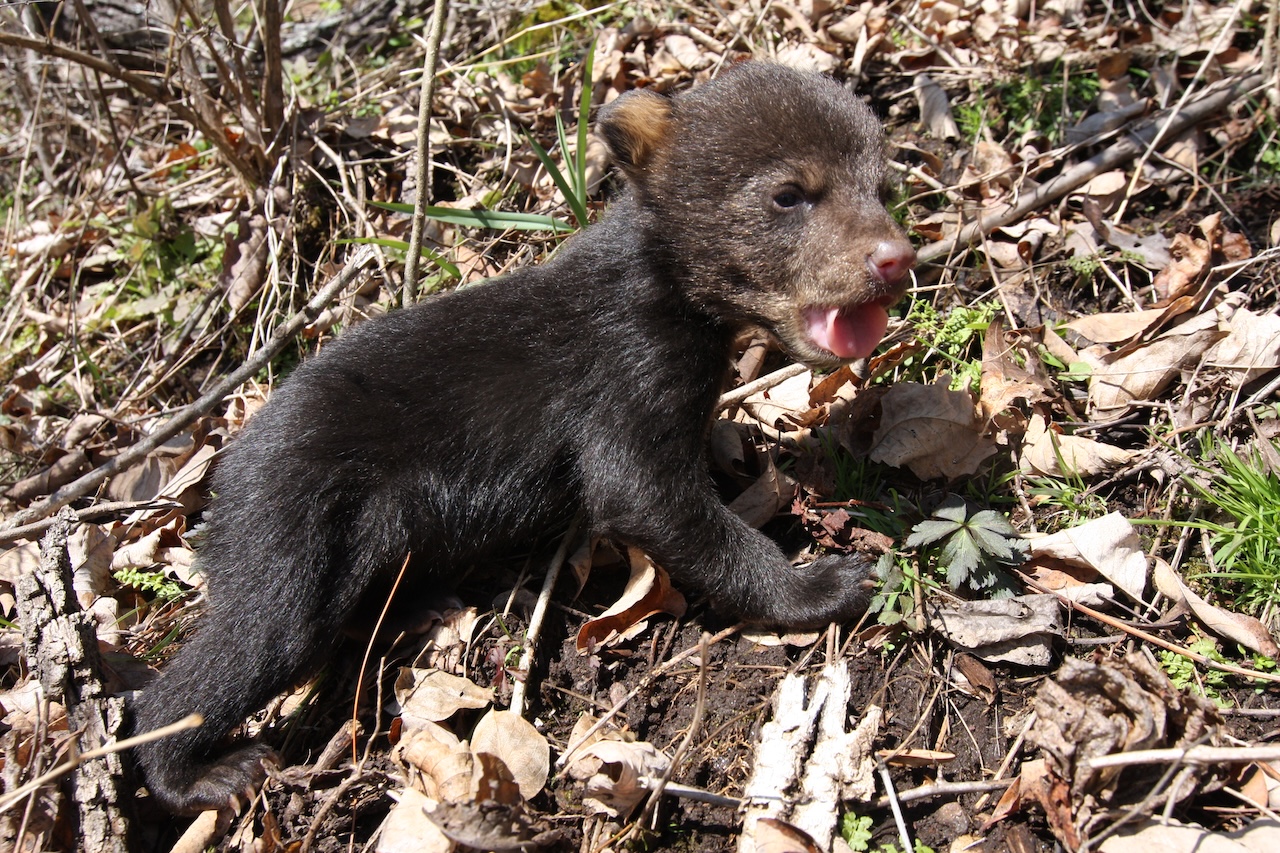
As the weather becomes warmer and people become more active outdoors, encounters with bears may increase.
Hibernating bears will emerge from their dens, with mothers and cubs being the last to emerge.
The N.C. Wildlife Resources Commission reminds the public to never approach or handle bear cubs.
Bear cubs seen alone are rarely orphaned or abandoned. Often the mother bear is nearby foraging for food and will return in a few hours.
Remaining in the area or attempting to catch the cub could inadvertently separate it from its mother and possibly injure the cub.


“Mother bears will soon be emerging from their den with their cubs that are experiencing the outside world for the first time and are very dependent on their mother to feed and protect them,” said Black Bear Biologist Jenna Malzahn. “People who try to capture or handle a cub are not only risking the cub’s safety, but their own if the mother bear is nearby, as she may try to defend her cubs. Even if you don’t see the mother bear, she could be nearby, and the cubs are waiting for her to return. By trying to capture a bear cub, you may cause it to become orphaned, injured or both.”
The possibility of encountering a bear den exists while hiking along a trail, walking a dog in a neighborhood or hunting. If this occurs, NCWRC’s advice is to remain calm and leave the area quickly and quietly.
It is illegal in North Carolina to capture or keep a black bear cub. The public should contact NCWRC if they encounter a bear cub and suspect it has been orphaned.
Do not attempt to capture it. Instead, give the cub plenty of room so its mother has space and time to reconnect with her cub.
To avoid harming yourself or the bear cub:
Do not handle it.
Do not attempt to catch it.
Do not remove it.
Do not feed it.
Do take note of your location and call the NC Wildlife Helpline at 866-318-2401.
If after hours or on weekends, call a district wildlife biologist to report it.
NCWRC staff will determine if a cub is orphaned, and if so, are trained to properly and safely capture and transport to one of the agency’s licensed bear cub rehabilitators for immediate care.
Cubs require a very specialized diet. Powdered formulas purchased from the store, or other foods can severely compromise their health. “The rehabilitators know the treatments and specialized food needed for cubs during this vulnerable time. Do not trust resources on the internet about feeding and caring for a cub,” Malzahn added. “It’s imperative for the public to never feed a bear of any age. This will cause it to become habituated to people, making it more challenging for successful rehabilitation back into the wild. Over the years, we have had orphaned cubs that were fed by people and despite our rehabilitators’ best efforts, these cubs were too habituated to be successfully released back into the wild.”